SPACESHIP
CVE MERIDIAN
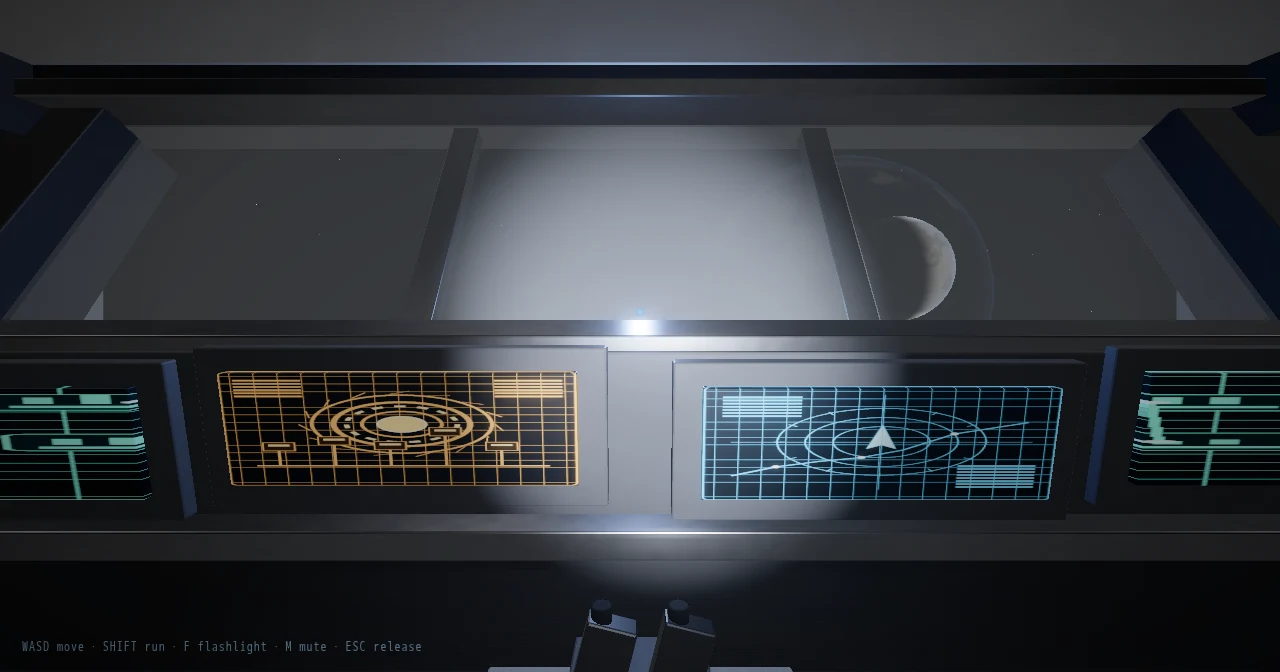
CVE Meridian began as a complete Blender interior and was adapted into a first-person Three.js scene. This article preserves screenshots of the main deck and cockpit, together with the production notes. The interactive demo has been retired.
View the screenshots screenshots + production notes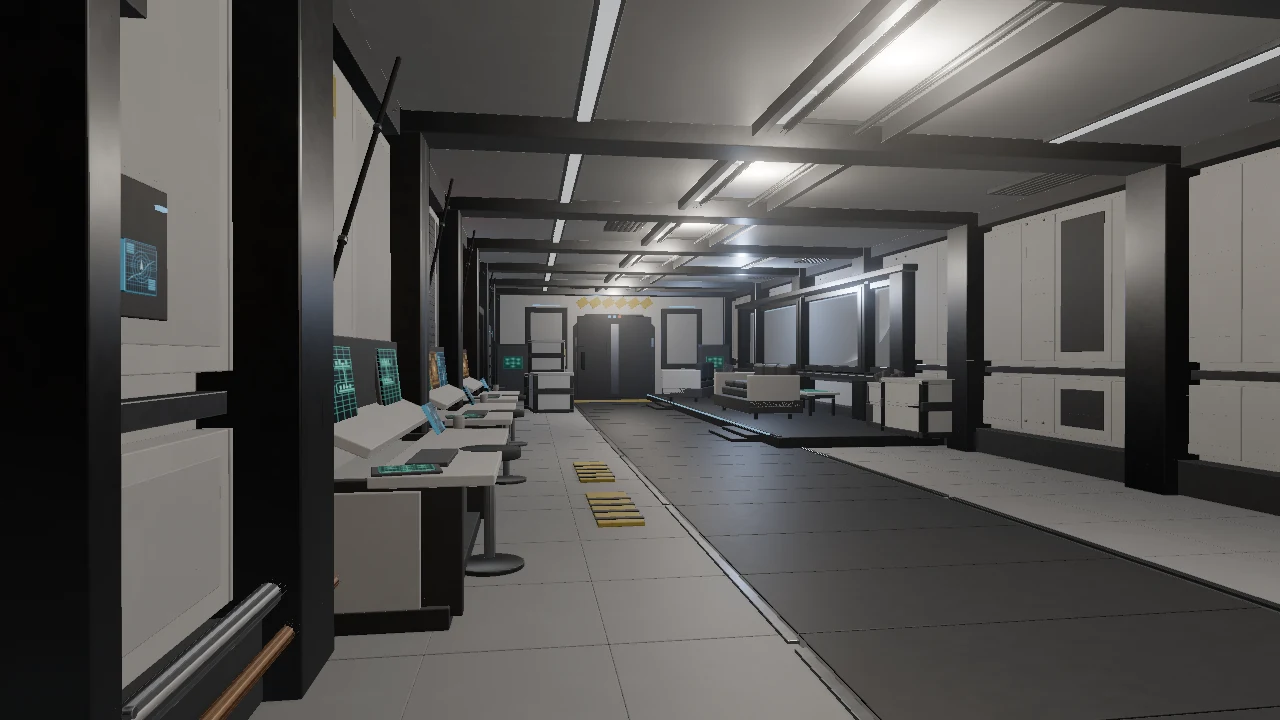
The same ship,
translated for realtime.
The source scene is not a flattened render. Its modeled interior is exported as a quality GLB with lightweight PBR proxy families, then relit in Three.js. The browser supplies the walk camera, exterior planet shaders, realtime audio, post-processing, collision zones, and the automatic forward-door behavior.
The quality export restores all 32 authored door pieces that the older web export omitted—16 on the aft assembly and 16 at the forward bulkhead. Two shared 1K atlases then bring functional screen graphics and reusable material breakup back into the realtime version without attaching a unique large texture set to every prop.
Function first.
Atmosphere in the seams.
White worn panels and charcoal structural bands set the ship's long rhythm. Cyan floor lines and displays mark circulation and function, while warmer lounge accents, red service lighting, brushed metal, rubber, fabric, pipes, vents, workstations, and cargo detail keep each zone legible without breaking the same kit of parts.
The default browser grade uses AgX at exposure 0.70 with restrained bloom at 0.18. That brings framing, brightness, authored doors, and screen readability closer to the Blender reference, but it is deliberately not described as pixel-equivalent to Blender or Cycles.
More ship on screen.
Less work per frame.
The runtime keeps source geometry indexed, merges compatible static meshes by material, renders static shadows once and freezes them, lowers DPR only when sustained frame rate calls for it, and releases renderer, texture, geometry, post-process, control, and audio resources when the page exits.
- 59.85 FPS across 300 frames / 5.012 seconds at 1280×720 DPR 1
- 402.6 MiB process-tree PSS and 654.3 MiB RSS on Radeon 8060S / RADV
- AgX exposure 0.70, bloom 0.18, quality GLB, authored doors, and frozen static shadows active
- W/A/D movement, door opening, cockpit traversal, flashlight, and shadow refresh all passed
- Zero page, request, console, or game-state errors in the final continuous run